An Architect’s Melbourne Terrace Restored To Its Original Beauty
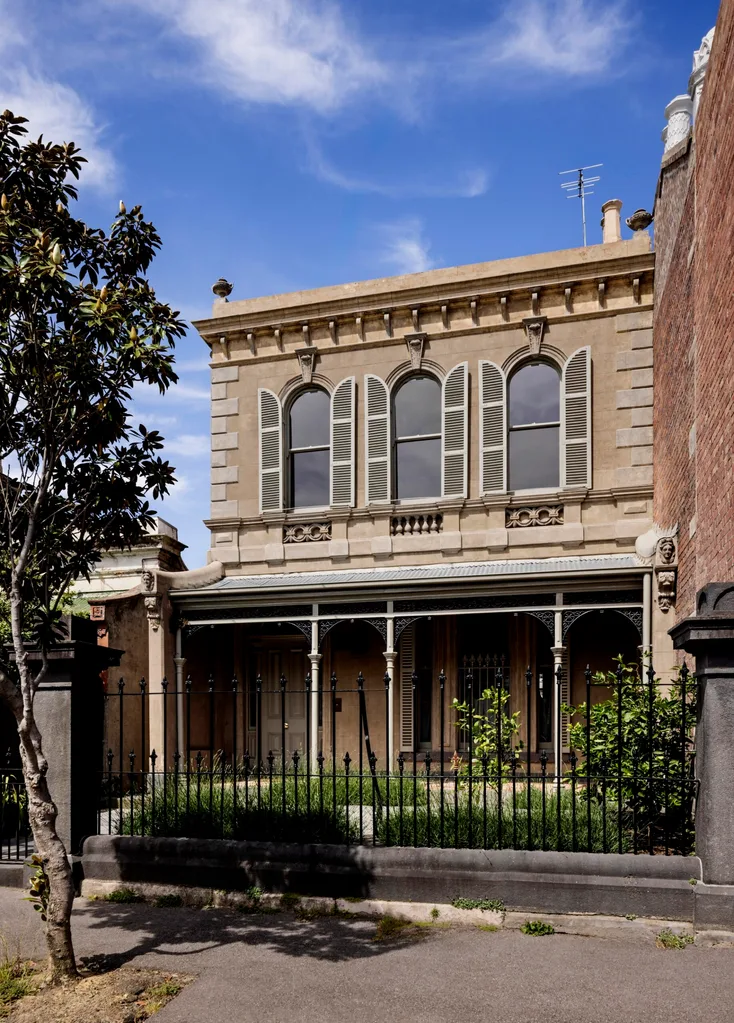
On an inner-city Melbourne street, a patchwork of architectural styles unites. Amanda Davis’ large semi-detached, late-Victorian boom-style terrace looks at ease alongside the neighbouring double-storey homes and modern apartment buildings. A change in personal circumstances had prompted Amanda, an architect and director at her eponymous firm, to make a fresh start. “With two grown-up daughters and a new partner, I was looking for a flexible, unconventional space that reflected my evolving life,” she says.
The Victorian terrace won her over with its grand proportions, heritage detailing and endless opportunities for reinterpretation. “My aim was to create flexible spaces that were open enough to host 12 for dinner, but intimate enough to feel like a home for all of us,” says Amanda.
Over the years, the building had fallen victim to a series of unfortunate reconfigurations, resulting in an illogical plan of compressed rooms and discordant materials. “But beneath the accumulated layers of past reworkings there was a softness in the way the spaces held tight and a calm geometry beneath the noise,” says Amanda. “My task was one of unveiling – gently peeling back what had been added over time to reveal the inherent beauty of the original building and allow its spaces to regain their original clarity.”
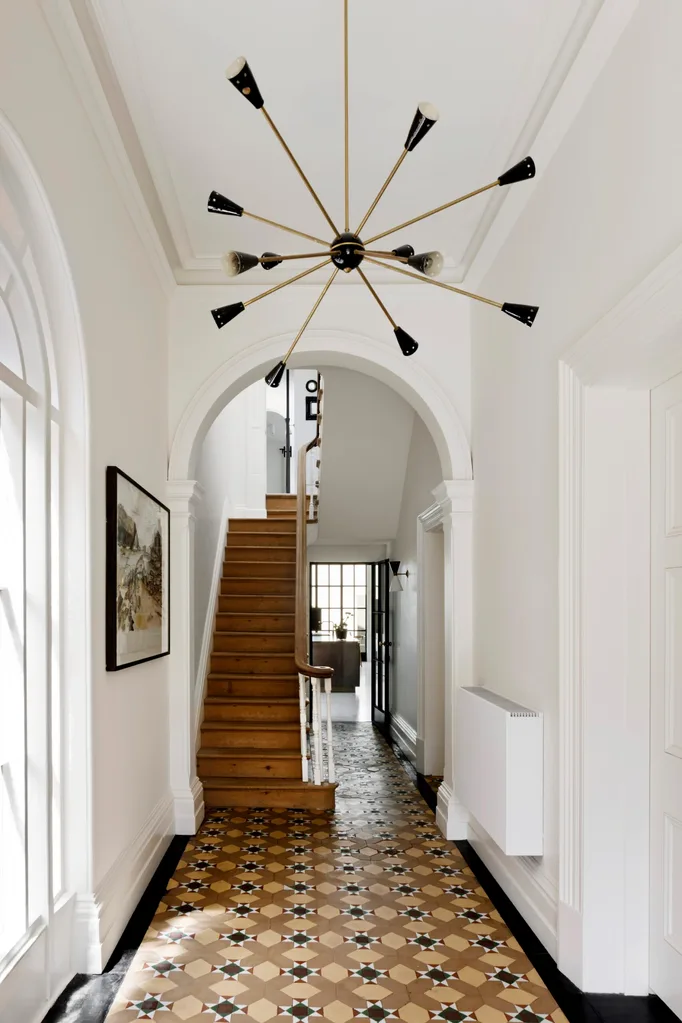
Amanda’s vision began with some subtle structural tweaks: removing an external staircase that was blocking daylight into the kitchen; deleting non-essential walls from several subdivided rooms to regain their original proportions; and rethinking the window plan and openings to orchestrate clearer sightlines between spaces. Externally, layers of paint and protective coating were scraped off the front facade to reveal the original 1870s rendered finish.
THIS IS THE LIFE
Amanda has designed her home to support different modes of living with ease. “For work, I shift between spaces depending on the quality of the light, while relaxing happens in the quieter pockets when someone wants a bit of separation,” she says. “When we entertain, the rooms open up naturally and the house takes on a more social rhythm without needing to be reconfigured.”
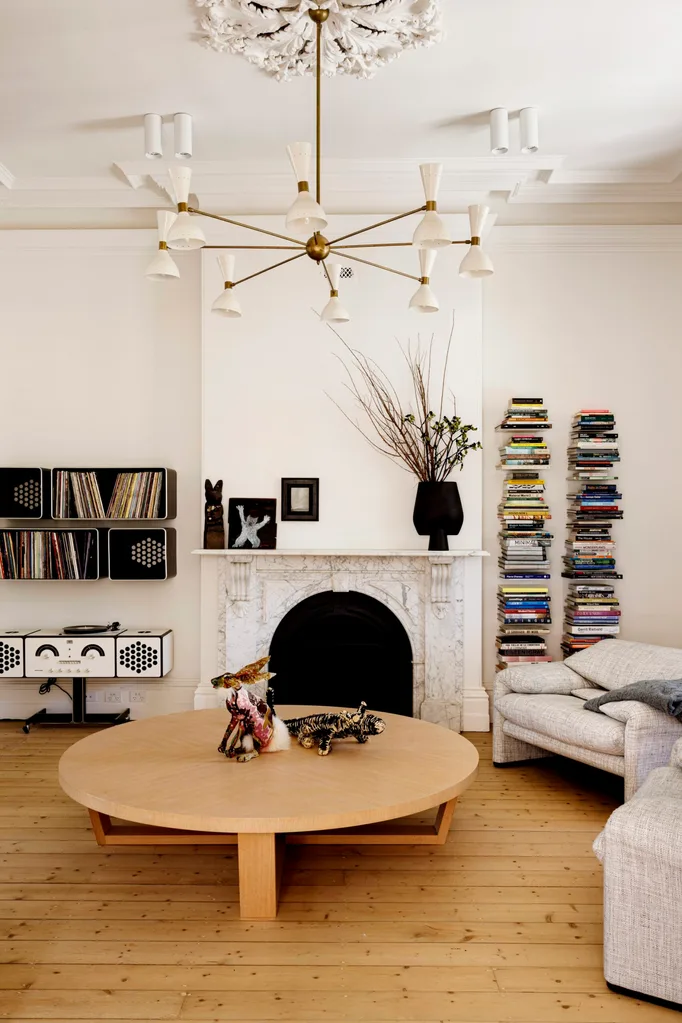
Period details were reinstated throughout, from the front wrought-iron gate to the grey marble fireplaces, the sash windows and baltic pine floorboards. “Much of this work depended on specialist craftsmanship – custom joinery, metalwork, custom light fittings and tailored finishes applied by hand,” says Amanda.
“Lead times stretched far beyond what would normally be expected but compromising on these elements would have undermined the integrity and character at the heart of the project. It was about restoring the home’s dignity.”
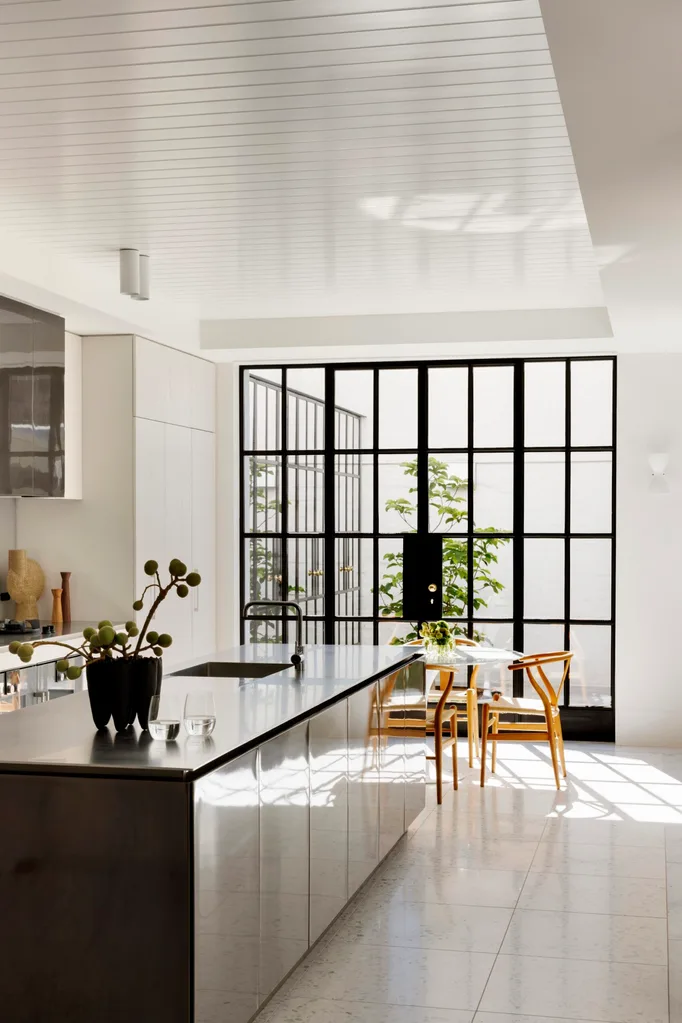
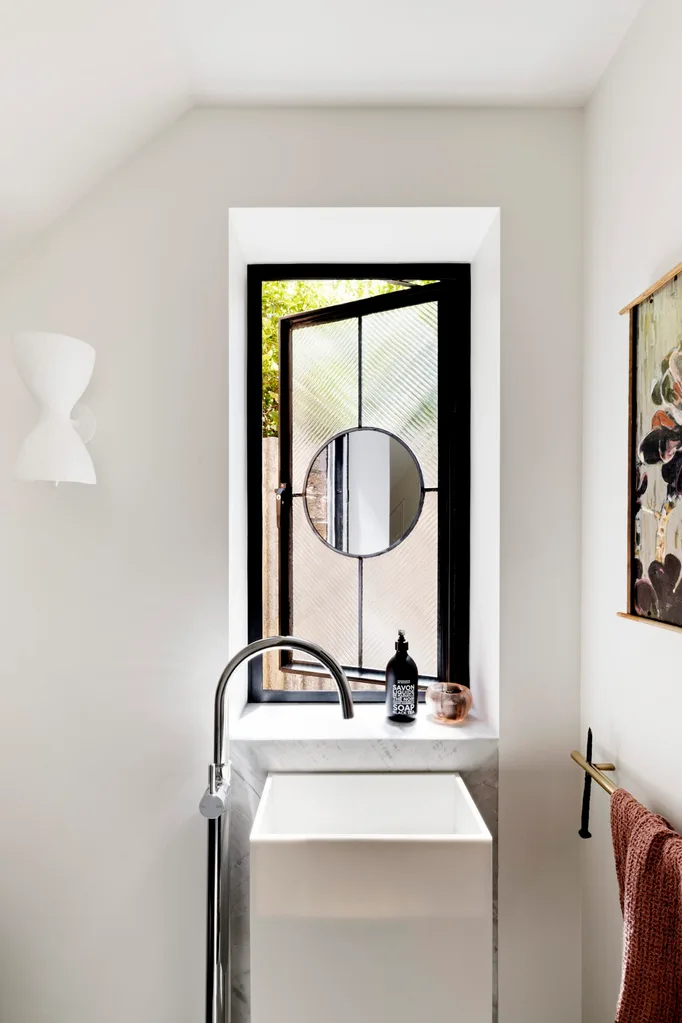
Amanda describes the interiors as a perfect blend of soft minimalism and historic resonance, with mirrored surfaces, vintage lighting and restrained materials bringing calm and cohesion. “We were guided by what we found on site: grey marble fireplaces, textured Baltic pine floorboards and the original staircase, with its moody green paint with slender black boarders,” she says.
“My approach was about uncovering and honouring what was already there.”
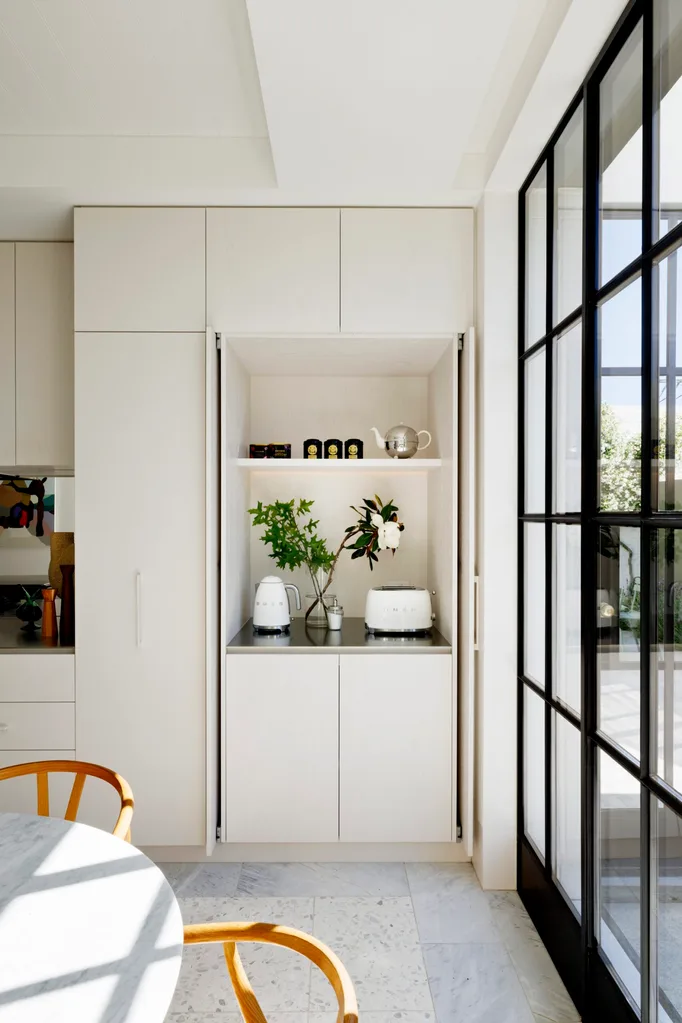
“The reworked home suits the way we live by offering flexible spaces rather than fixed-purpose rooms.”
AMANDA DAVIS, OWNER & ARCHITECT
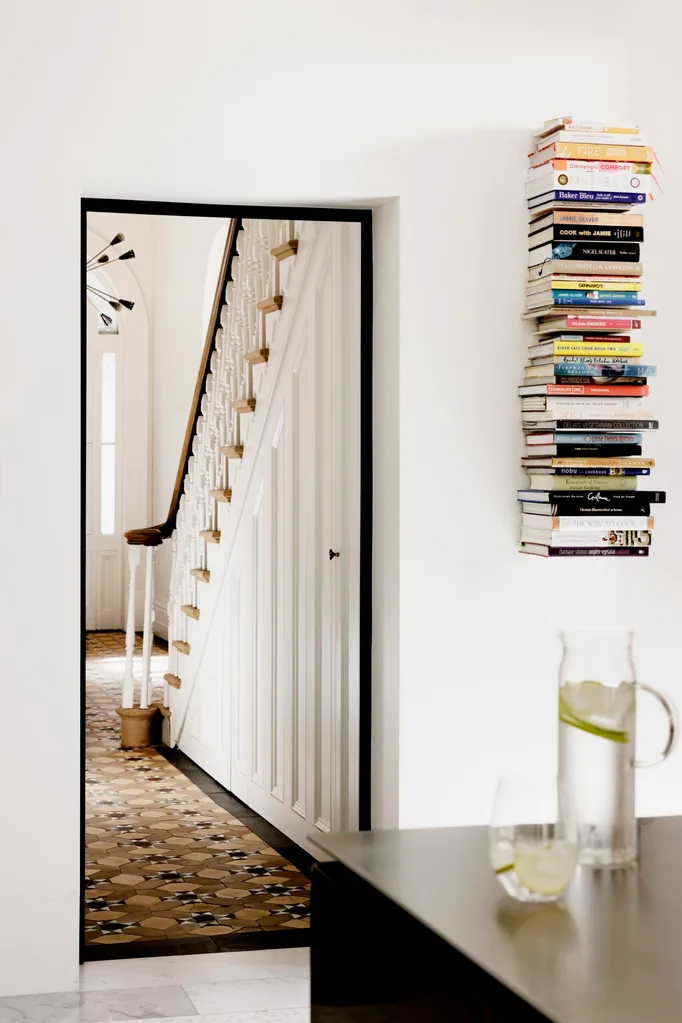
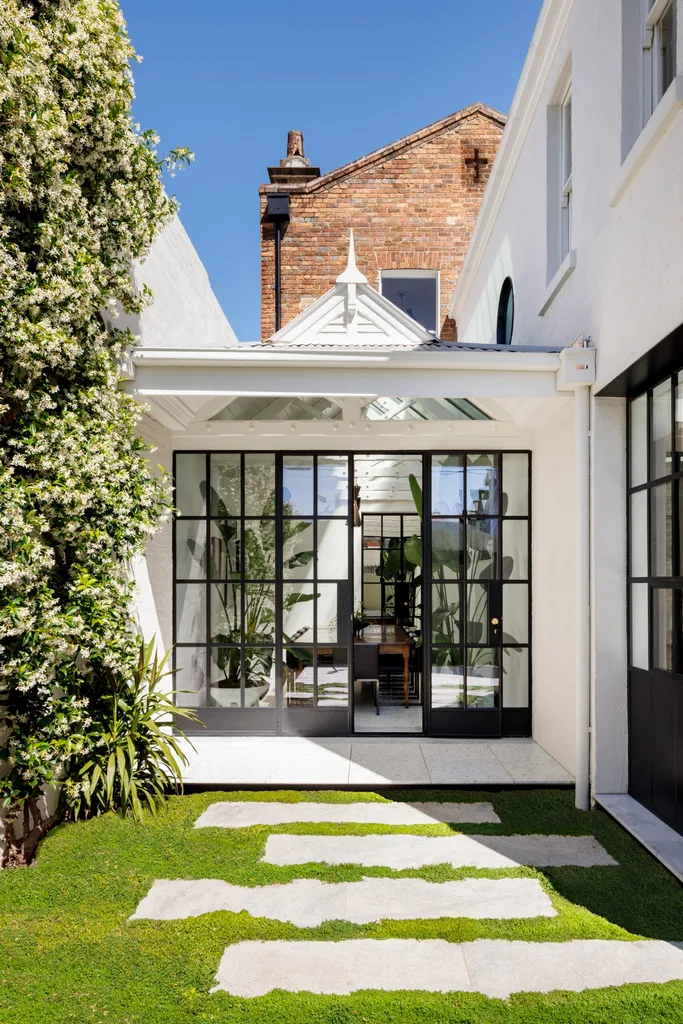
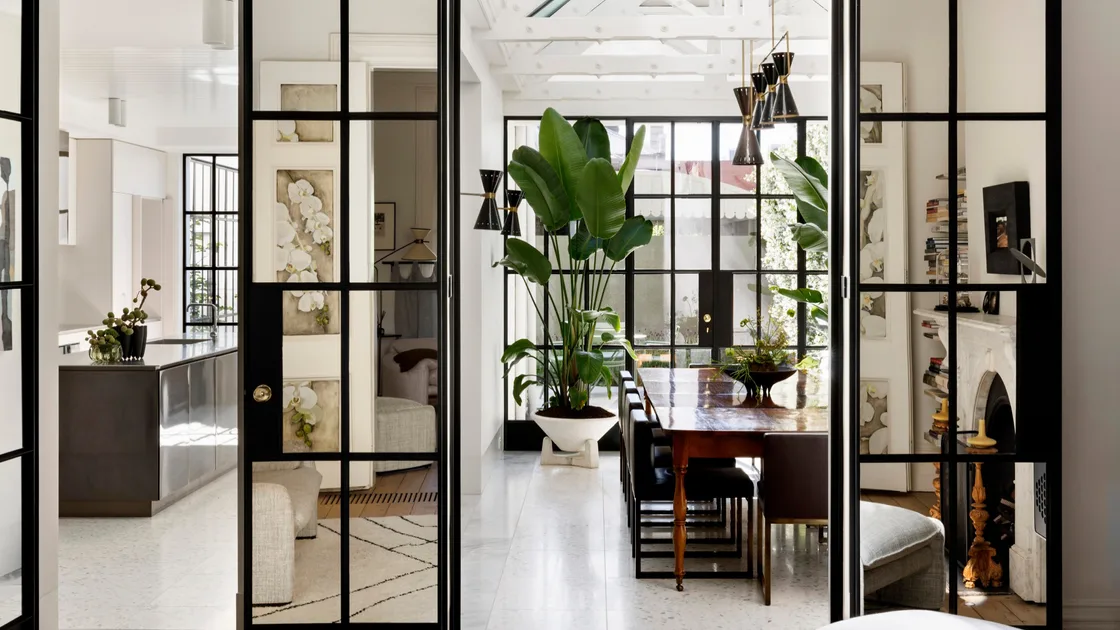
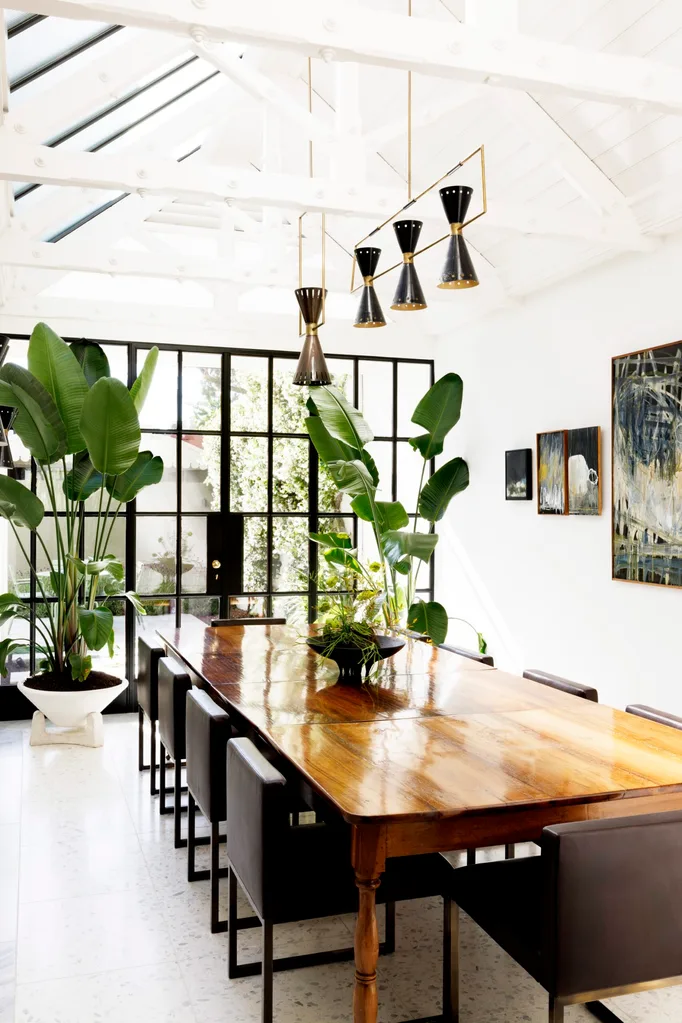
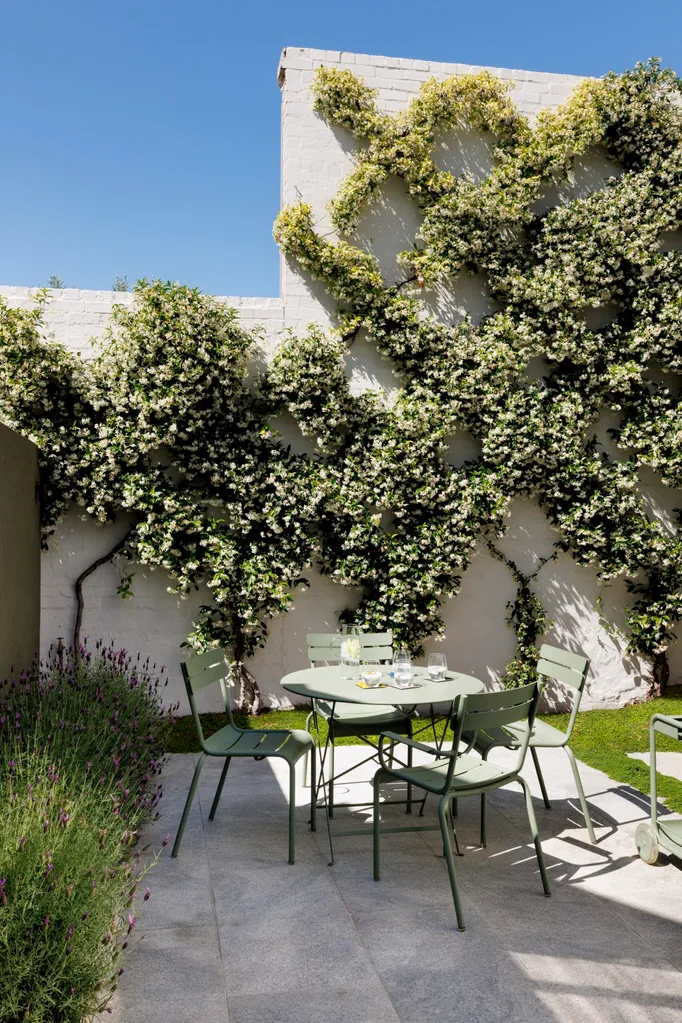
In the kitchen, black steel-framed doors and windows draw light into the space, mirrored surfaces and cabinetry bounce the light around and a deliberately fresh palette contradicts its previously dark iteration. Sharing the same light, materiality and scale, the dining room sits directly off the kitchen and flows out to the outdoor dining and courtyard.
An oversized table inherited from her parents and steeped in memory fits the space perfectly, “almost as if it was made for it”, says Amanda.
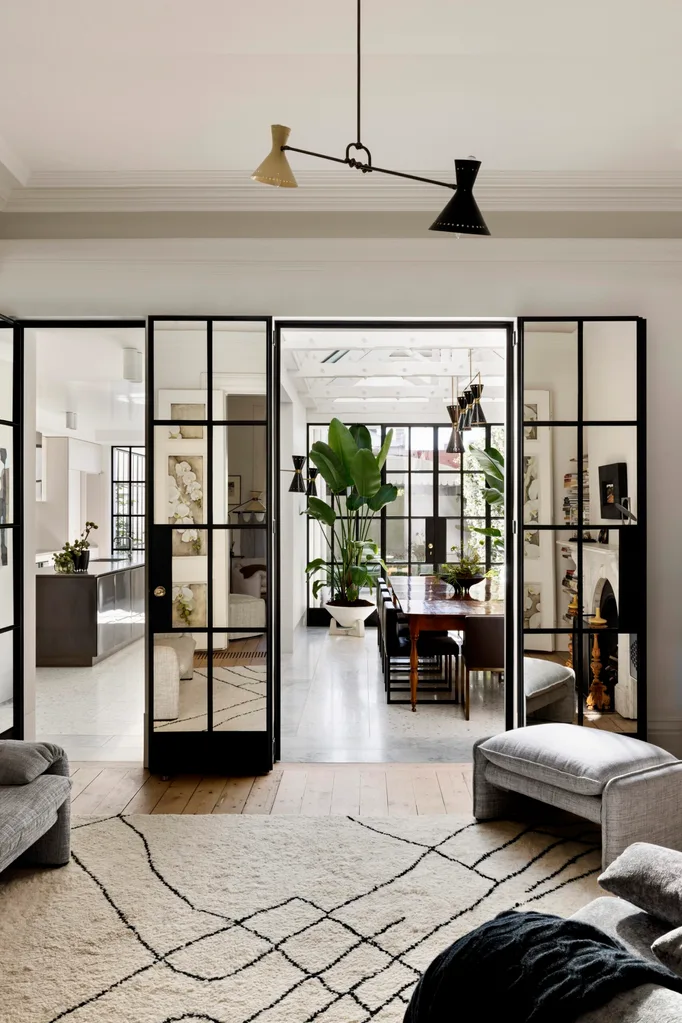
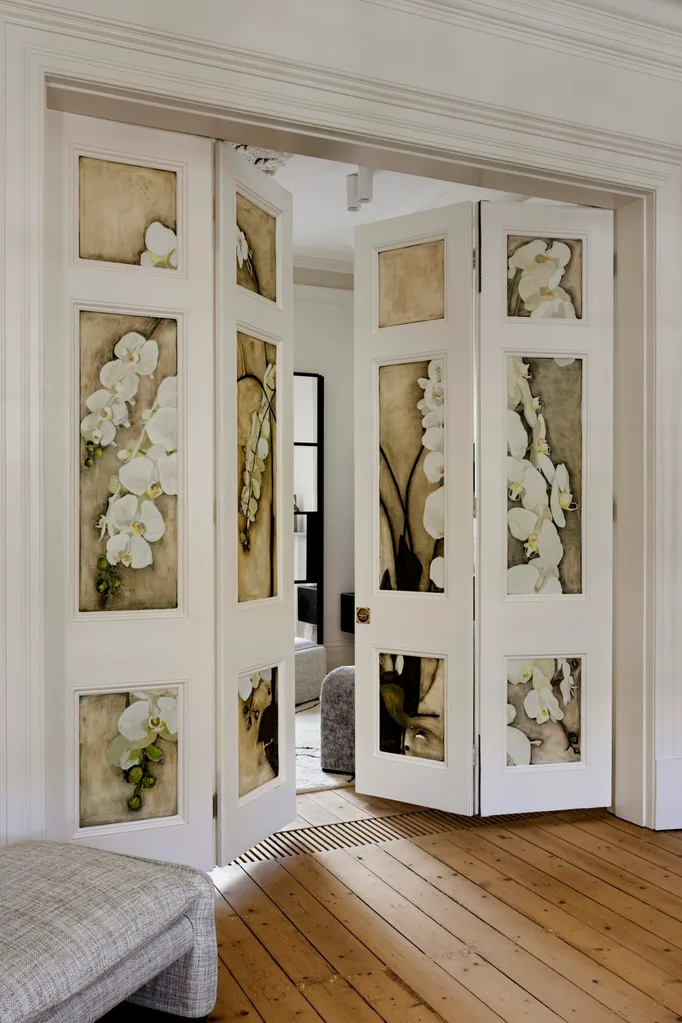
Two living rooms sit side by side, each with their own character and purpose. One functions as a quiet music room with custom wall shelves for books, records and a treasured Brionvega record player; the other is more of a comfy TV room with a modular lounge and study nook. A set of original bifold doors divides the two spaces and feature a hand-painted mural by Amanda’s partner Simon.
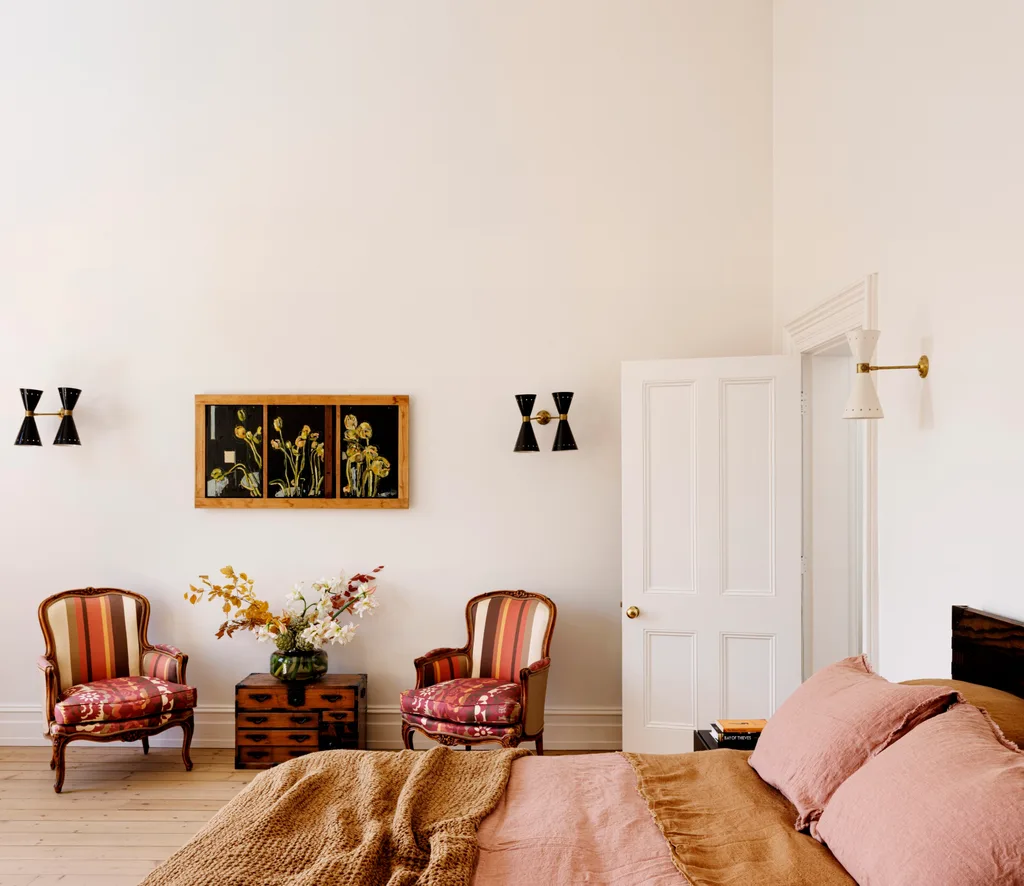
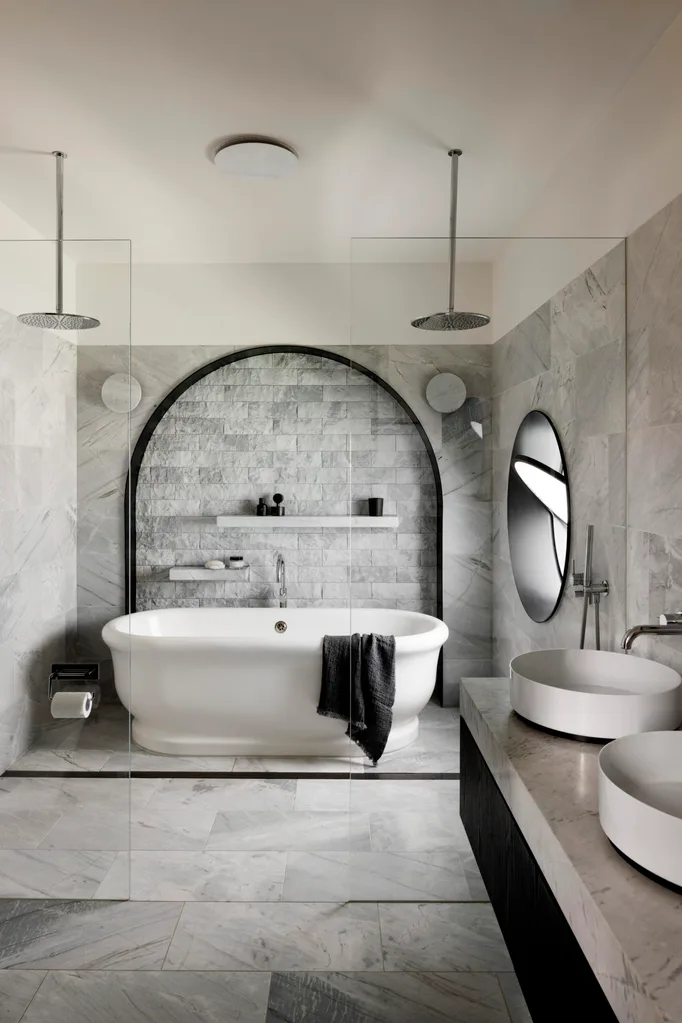
Upstairs, the main bedroom runs the full width of the block and is bathed in soft westerly light. Ornate cornices and a ceiling rose have been added to match the downstairs, while the old fireplace has been brought back to life. The grey-marble bathroom – originally two smaller bathrooms – blends refinement with a touch of whimsy.
Three porthole windows bear a playful resemblance to bubbles, scattering light across the room, while a generous arch rises behind the bathtub with a double shower zone discreetly placed in front. No wonder it’s one of Amanda’s favourite spaces.
“The reworked home suits the way we live by offering flexible spaces rather than fixed-purpose rooms,” she adds. “Areas can open up for entertaining or contract into quieter retreats. Overall, the house is simple to inhabit
and straightforward to maintain, which keeps the focus on living and enjoying our time in it.”
The Design Team:
Amanda Davis: @amanda_davis_architect.
Michael Ormandy: @ormandybuilt.

link