The Story of Canada’s Architecture Recreated in Miniature Detail
Under the bustling intersection of Sankofa Square in downtown Toronto is an homage to contemporary architecture in Canada. Over the past several years, founder Jean-Louis Brenninkmeijer, with a team of talented artists, engineers, and storytellers, has built out a miniature representation of Canada, selecting buildings based on factors like visual interest and cultural or local significance. There are currently replicas of Niagara, Toronto, the Golden Horseshoe, Ottawa, Quebec, the East Coast, the West Coast, and, most recently, Northern Canada, which all together have taken over 600,000 hours of work to craft.
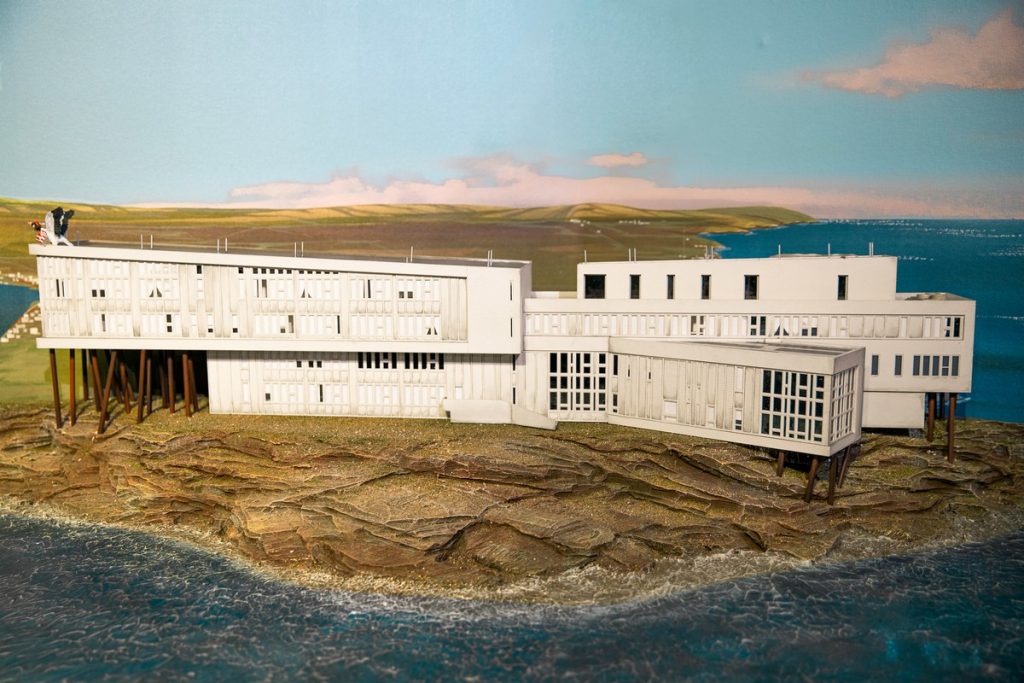
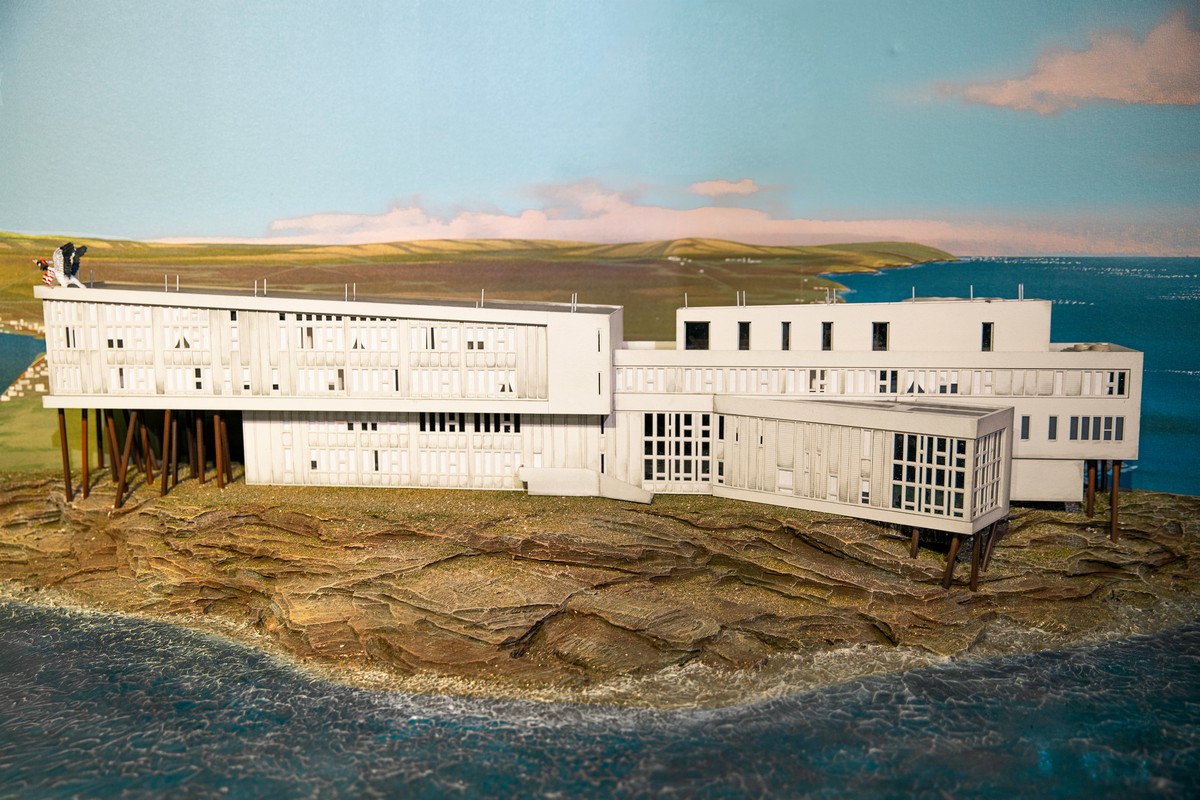
On Canada’s eastern edge, Fogo Island Inn, designed by architect Todd Saunders, stands out as a contemporary yet iconic piece of architecture on the rugged Newfoundland coast. When Senior Design Specialist & Model Maker Andre Markovics was working on the structure for Little Canada, he knew that the stacked blocks would translate well into a model build. While most miniature buildings need to be cut, painted, and then assembled, for Fogo Island Inn, Markovics explains that “the simple, clean lines allowed me to preassemble and clean all edges before painting,” lending itself to “a drastically simpler and cleaner build method.” Since the structure was so strong and robust, they were then able to keep the iconic rusted stilts as an aesthetic element instead of a critical structural one and complete the silhouette of the building.
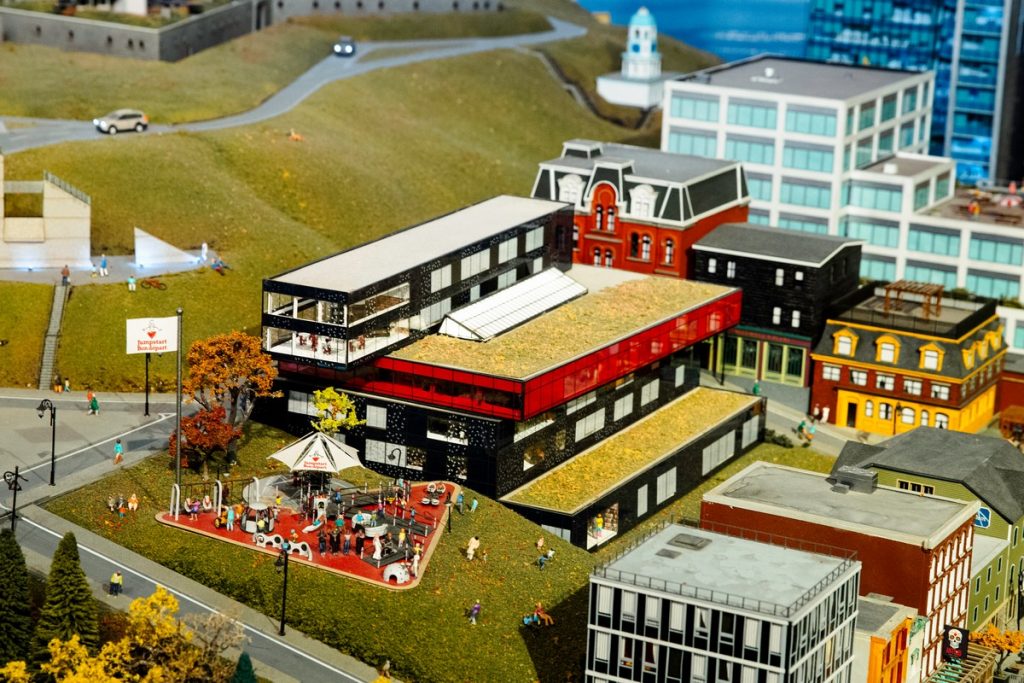
Over in Little East Coast’s Nova Scotia, the Halifax Central Library’s distinctive cubic architecture and cantilevered fifth floor reminded Markovics of stacked books, which he thought about while modeling its miniature version. The library itself was designed in 2014 by the architecture firms Fowler Bauld & Mitchell and Schmidt Hammer Lassen Architects. The tight space of the miniature Halifax and the need to allow for sightlines meant that they needed to simplify the building without losing its character. Weight was a consideration for the model, with the cantilevered floors being anchored to the core, so the Little Canada team chose to paint the acrylic instead of using additional materials. Markovics recalls that “the beautiful blue and red glass with the etched leaf pattern really pushed my skills to etch and paint both sides of the acrylic.”
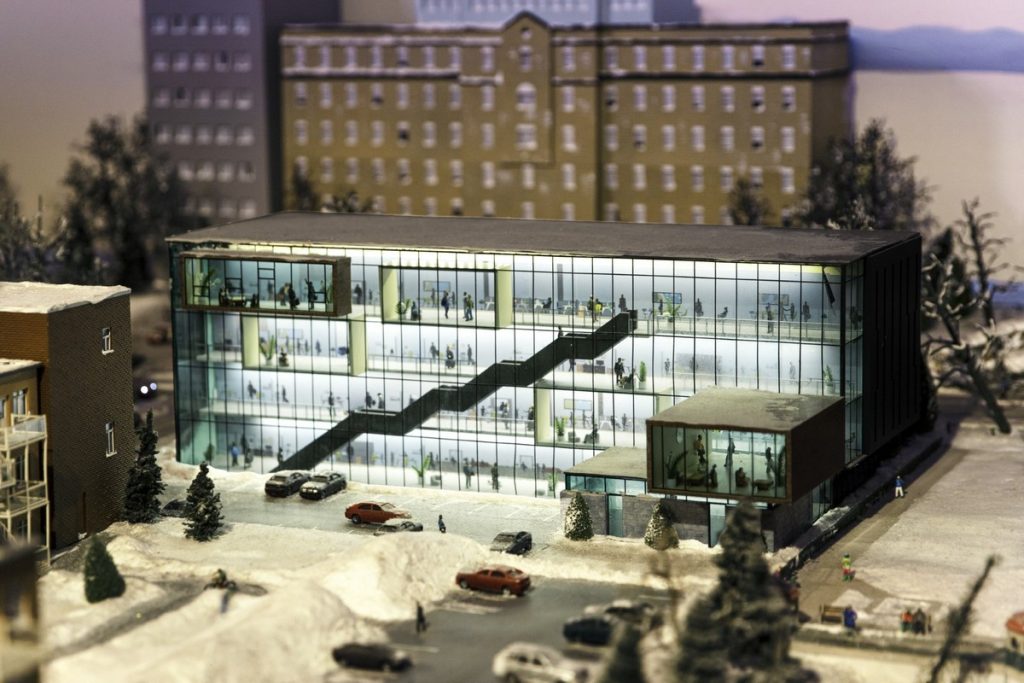
Heading further west to Quebec is the Desjardins Head Office, which was built in 2013 and designed by ABCP architecture + Anne Carrier Architectes. It has a glass wall that runs the height of the building, letting natural light into the atrium and offices. In building the model for Little Canada, Director of Destinations Mark Domanski explains that they used ‘coke-bottle green’ acrylic instead of the usual clear plastic cut in the laser to make it look more like real glass when the interior lights are off.
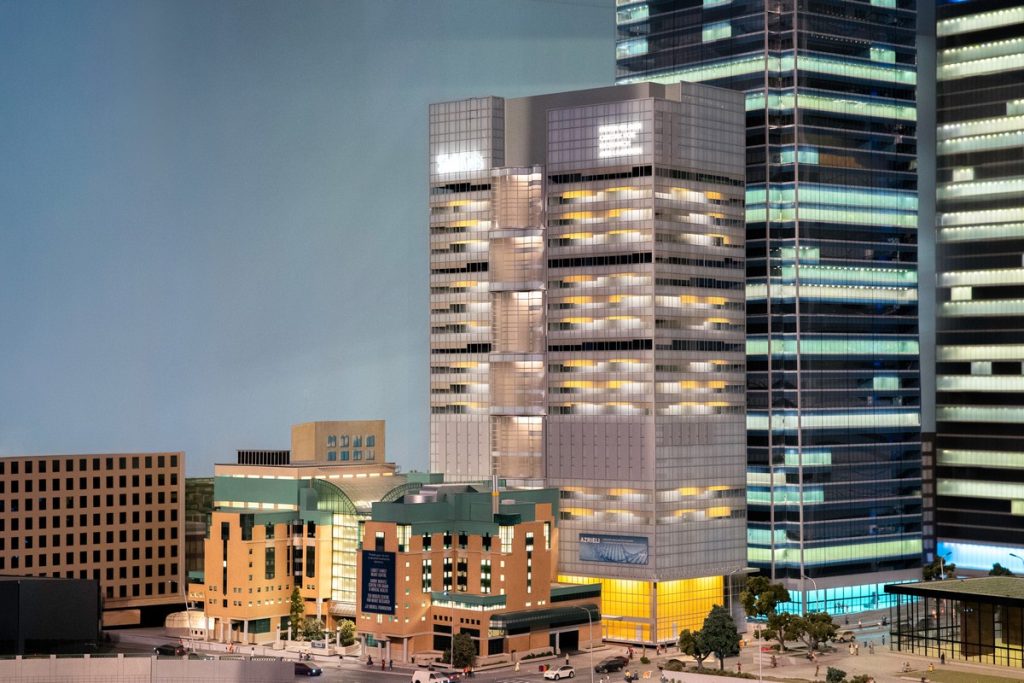
For Toronto’s Sick Kids building and Peter Gilgan tower, designed by architect Eberhard Zeidler and Diamond Schmitt Architects, respectively, Andre Markovics took time to study the buildings’ structure. The atrium arches in particular were interesting to work on, as they needed to be curved at first glance—but faceted on closer inspection—while minimizing the amount of support structure. Senior Design Specialist & Model Maker Aliyah Tom describes going through trial and error to find the right thickness of acetate for the curved sections of the wall, explaining, “If it was too thick, it would not make the curve, and if it was too thin, it would collapse into itself.” She ended up using 0.25 mm thick acetate and two acrylic pieces with slots to hold the curves together. They also developed a new technique to make the SickKids logo light up by painting the main wall to black out the areas around the logo while still allowing light to pass through the translucent, coloured letters.
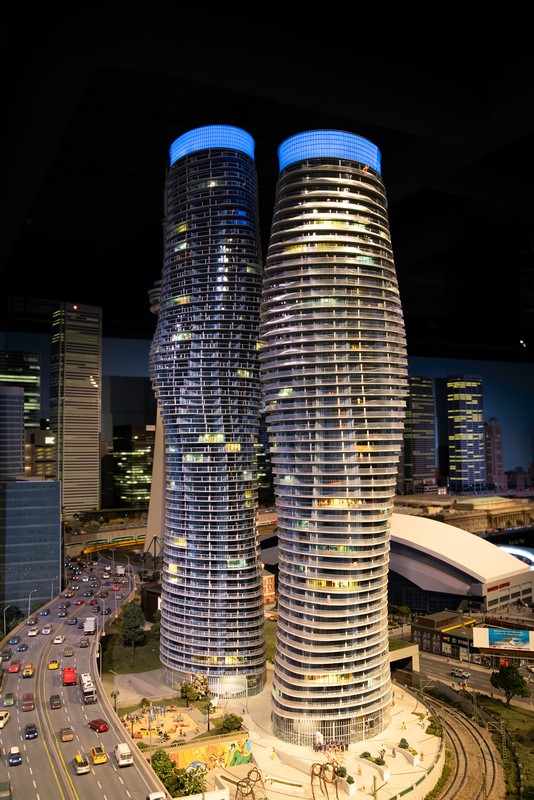
Nearby, the two Absolute World towers in Mississauga, nicknamed the “Marilyn Monroe Towers,” presented an interesting challenge for the Little Canada team. Designed by Burka Architects and MAD Studio, they are 50 and 56 floors, respectively. As these were larger buildings, the Little Canada team chose to build the towers at a 1:120 scale, making them 53 and 58 inches tall. Markovics explains that the buildings were built up from the same floor plate that is rotated at each consecutive floor, with one rotating 4 degrees per floor and the other varying, creating the well-known alternate views of the towers from different angles. To achieve this, Markovics and the team placed each floor on a thin, rectangular wood core one floor at a time, which Markovics likens to stacking tiers on a cake.
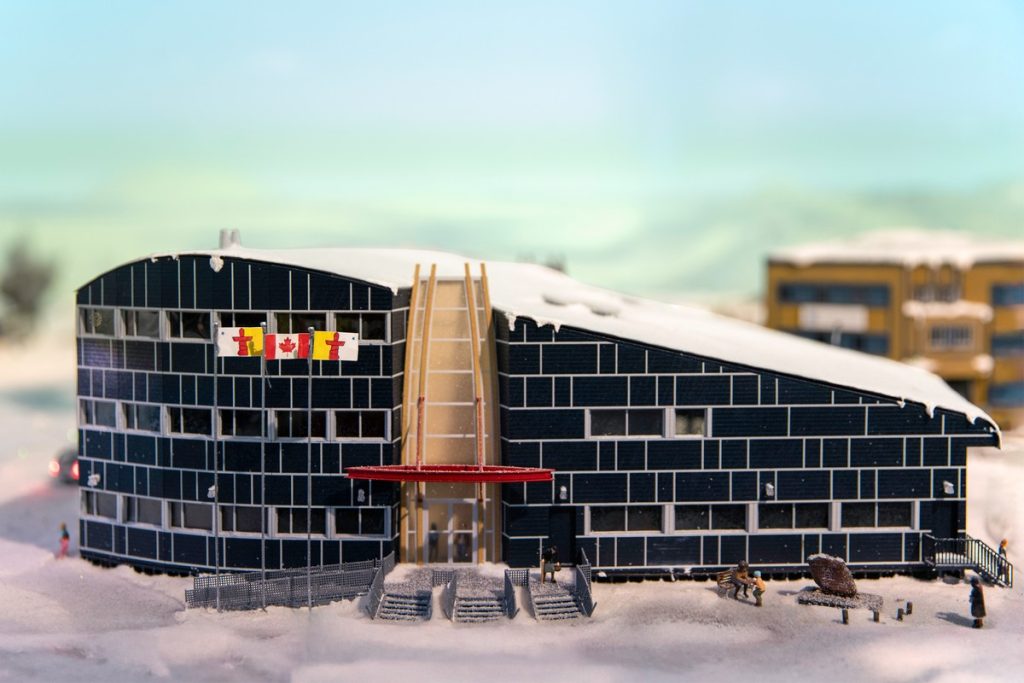
In Iqaluit, the Legislative Assembly Building of Nunavut is unlike most Canadian legislatures in that it incorporates a more contemporary architectural style and combination of glass and wood. Several architecture firms worked on the project, including Pin/Matthews Architects and Ferguson Simek Clark Architects and Engineers. To create the building’s model, Aliyah Tom describes 3D designing it to extract the roof and walls. As she explains, “With a flat roof, you can use straight lines to determine the correct shape and size, but with a curve and angles, that becomes more difficult, so by designing the structure in 3D, you’re able to solve problems and see overall shapes a lot more easily.” To ensure the roof maintained its shape, Tom and the team ended up needing to glue and tape down the roof overnight.
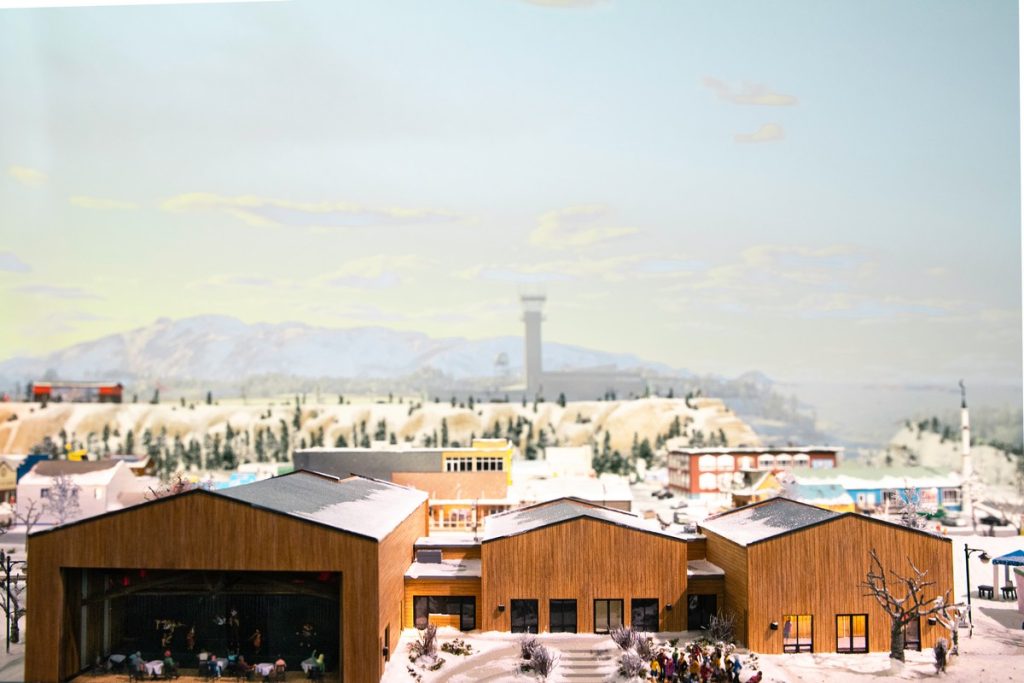
The Kwanlin Dun Cultural Centre is a building that was chosen for its high cultural significance in Whitehorse and became an important focal point in the Northern portion of Little Canada as well. Members of the Little Canada team travelled to Whitehorse to better understand the people, places, and stories that shape the region. Architects David Nairne & Associates worked on the centre, which includes a longhouse, artists’ studios, a gallery, classrooms, and an outdoor ceremonial space. Little Canada designer Aliyah Tom explains that since the walls come up past the roof at the front and back instead of having an overhang like with most buildings, they needed to come up with a new way of building and attaching a roof.
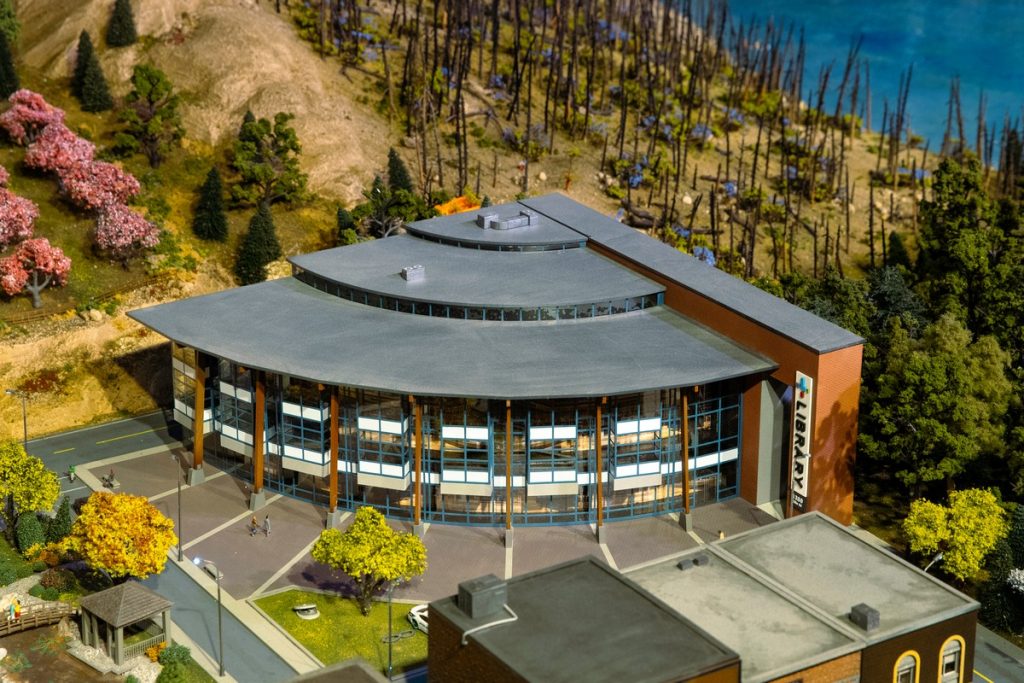
In Little West Coast, the Downtown Kelowna Branch of the Okanagan Regional Library has the floor plan of a quarter circle, with the main curved wall being made up of glass panes. It was designed by Moshe Safdie & Associates and later renovated by Urban Arts Architects. The unique shape created some new challenges for the Little Canada team, so they designed the curved wall with 3D software first. They then integrated the square glass boxes into the shape by building a skeleton made of acrylic along the backside of the curved wall to help support them.
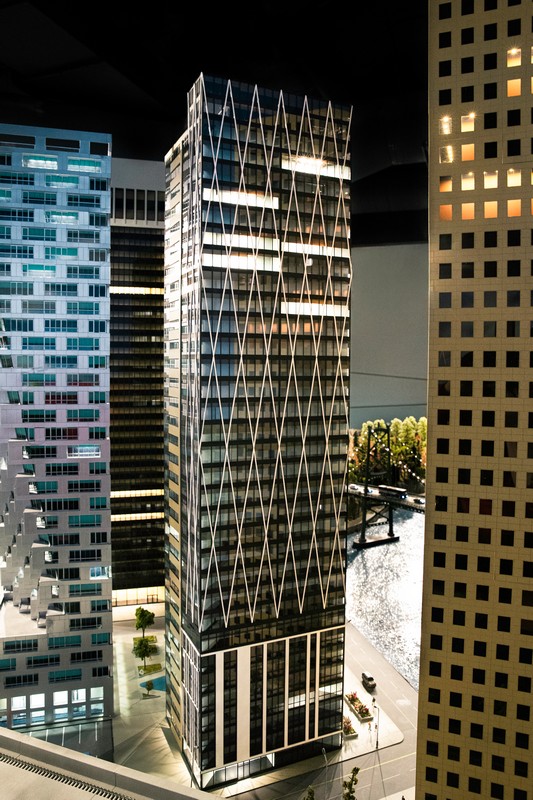
One of the taller structures in Little Canada, Vancouver’s 8X on the Park sits at four feet and two inches. The original mixed-use tower was designed by GBL architects and includes large X shapes across the outside walls, giving it its name. Aliyah Tom explains that because of the structure’s larger size, even the largest laser wasn’t big enough to cut one wall fully, so they needed to piece together eight sheets of acrylic for the walls.
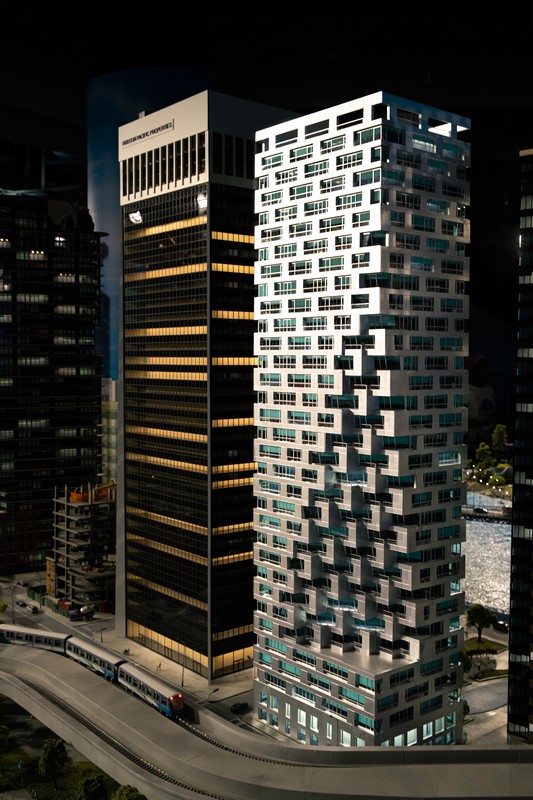
Senior design specialist and model maker Andre Markovics recalls building Vancouver House as a complex engineering feat, due to its distinctive triangular base that lofts up to a traditional rectangular floor plan. To achieve that, Markovics recalls using a plywood core to reinforce the structure and then considering how to simplify the southeast twisted face of the tower. Markovics explains that he “self-imposed a rule that each unit and balcony had to be the same for the sake of fabrication but would follow a simplified curved lofted surface.” The building, which sits at the entrance to Downtown Vancouver across the Granville Bridge, was designed by Danish architect Bjarke Ingels Group with architect of record DIALOG.
Each structure in Little Canada represents many hours of research and craft. Together, they offer a condensed view of Canadian architecture, allowing visitors to engage with buildings they may never encounter firsthand and to consider questions of scale, form, and construction.
Gwynneth Tansey is a writer and communications professional with a strong interest in culture, design, and how people experience places.
link